

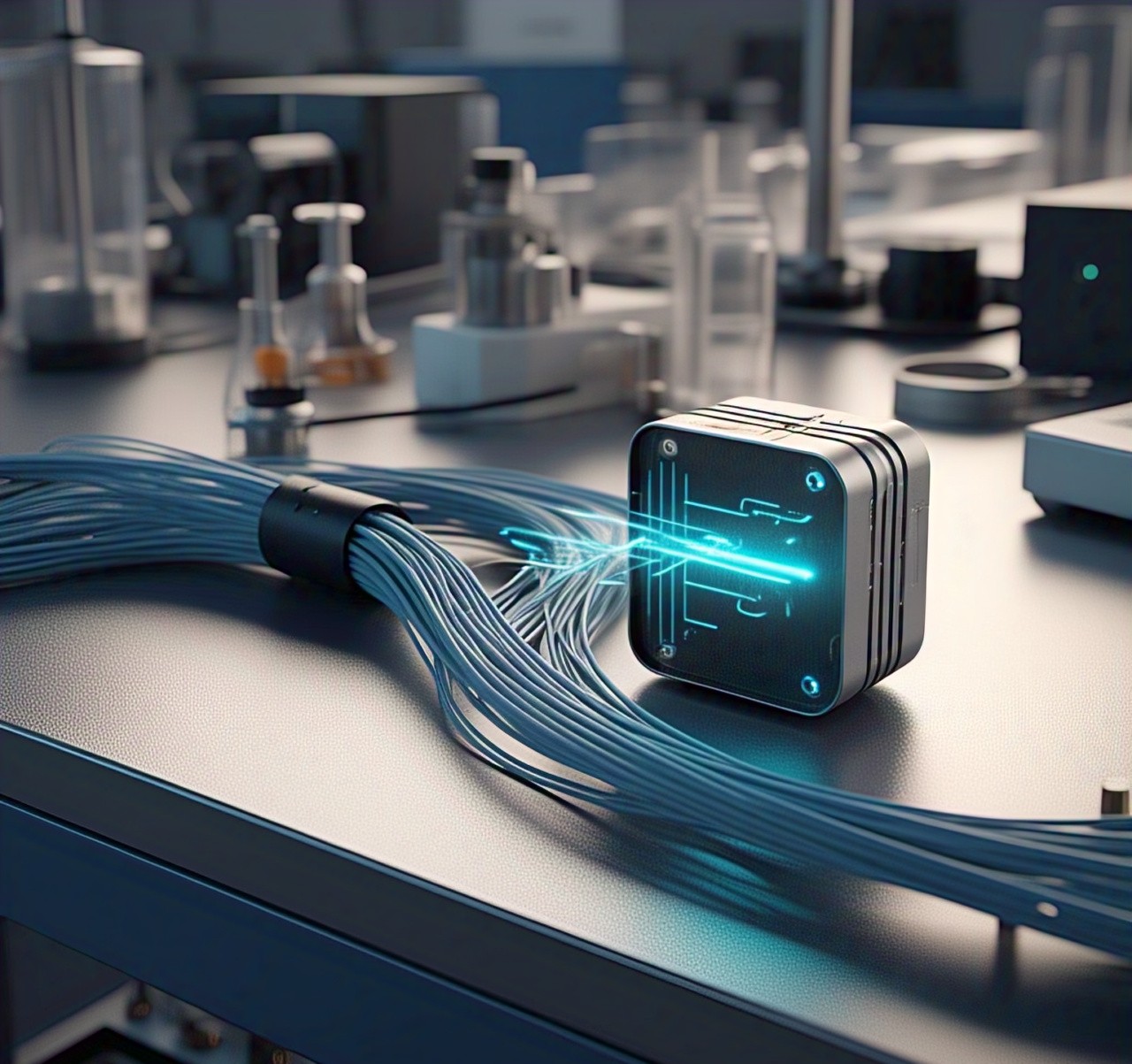
Quantum Source in Fiber Optics:
The world’s appetite for fast, secure, and reliable data transmission continues to grow, driven by everything from streaming video to cloud computing and the rise of quantum technologies. At the heart of this digital revolution lies fiber optics—a technology that has already transformed global communications. But as we stand on the brink of the quantum era, a new concept is emerging: the quantum source in fiber optics. Understanding what this means, and its implications for high-speed data transmission, is crucial for anyone involved in next-generation networking and telecommunications.
What Is a Quantum Source in Fiber Optics?
A quantum source in fiber optics refers to a device or system that generates quantum states of light—most commonly single photons or entangled photon pairs. These quantum states are the building blocks for quantum communication, quantum cryptography, and even quantum computing. Unlike classical light sources, quantum sources are engineered to produce light with properties that obey the rules of quantum mechanics, enabling applications that are fundamentally impossible with conventional technology.
In practical terms, quantum sources can be integrated directly into fiber optic networks. For instance, fiber-based quantum entanglement sources can generate and deliver entangled photons over standard or specialty optical fibers, making them compatible with existing telecom infrastructure and paving the way for scalable quantum networks5.
The Role of Fiber Optics in Quantum Data Transmission
Fiber optic cables are already the backbone of the world’s high-speed data networks, prized for their ability to transmit light signals over long distances with minimal loss and immunity to electromagnetic interference. In the quantum realm, these same properties make fiber optics the ideal medium for transmitting delicate quantum states.
Several types of fiber are used in quantum applications:
-
Single-mode fibers: These transmit light in a single transverse mode, ensuring stable and predictable propagation—critical for maintaining the integrity of quantum signals.
-
Polarization-maintaining (PM) fibers: These specialized fibers preserve the polarization of light, which is essential for many quantum protocols that rely on specific polarization states1.
-
Specialty fibers: Recent advances include micro-structured fibers with air pockets, designed to support the unique requirements of quantum communication and computation, such as low loss at non-standard wavelengths and the ability to manipulate photon properties inside the fiber.
How Quantum Sources and Fiber Optics Enable High-Speed, Secure Data Transmission
The marriage of quantum sources and fiber optics unlocks several key advantages for data transmission:
-
Ultra-High Bandwidth: Fiber optics already support data rates far beyond traditional copper cables. Quantum sources can further enhance this by enabling multiplexed quantum channels, potentially increasing the information capacity of each fiber strand.
-
Low Signal Loss and Long-Distance Transmission: Quantum information can be transmitted over long distances with minimal degradation, especially when using advanced low-loss or hollow-core fibers. These specialty fibers reduce latency and preserve quantum coherence, which is essential for reliable quantum communication.
-
Enhanced Security: Quantum communication protocols, such as quantum key distribution (QKD), leverage the unique properties of quantum sources. Any attempt to intercept or measure the quantum signal disturbs its state, alerting users to potential eavesdropping and ensuring unbreakable encryption.
-
Flexibility and Compatibility: Fiber-based quantum sources are compatible with the vast existing fiber optic infrastructure, allowing for gradual upgrades and integration with classical networks.
Real-World Applications of Quantum Sources in Fiber Optics
The integration of quantum sources with fiber optics is not just theoretical—it’s already being tested and deployed in several cutting-edge applications:
-
Quantum Cryptography: Quantum key distribution over fiber optic networks is being piloted by governments and corporations worldwide, offering a new level of security for sensitive data.
-
Quantum Internet: The vision of a quantum internet relies on fiber optic cables to connect quantum computers and sensors across cities, countries, and eventually the globe. Quantum sources are essential for generating the entangled photons needed to link these quantum nodes.
-
Quantum Computing Networks: As quantum computers become more powerful, fiber optics will be used to connect quantum processors, enabling distributed quantum computing and new forms of parallel processing.
-
Telecommunications: Telecom providers are exploring quantum-enhanced fiber networks to future-proof their infrastructure and offer new services based on quantum security.
Technical Challenges and Innovations
While the promise of quantum sources in fiber optics is immense, several technical challenges must be overcome:
-
Maintaining Quantum State Integrity: Quantum signals are extremely sensitive to loss, dispersion, and noise. Even minor imperfections in the fiber can degrade quantum states. Innovations like polarization-maintaining fibers, hollow-core fibers, and advanced dispersion management are helping to address these issues.
-
Wavelength Compatibility: Many quantum sources operate at wavelengths that differ from standard telecom bands. Specialty fibers with tailored transmission windows are being developed to bridge this gap and ensure efficient quantum signal propagation.
-
Scalability: Building large-scale quantum networks requires robust, flexible, and easily deployable quantum sources. Fiber-based solutions offer the best path forward, as they can be integrated into existing infrastructure and scaled as needed.
The Future: Towards a Quantum-Enabled Fiber Optic Network
The future of high-speed data transmission is quantum. As quantum technologies mature, the demand for fiber optic cables that can support quantum sources will only grow. Researchers are already developing new types of fiber—such as micro-structured and hollow-core fibers—to meet the unique demands of quantum communication and computation. These advances promise to unlock:
-
Unprecedented Data Security: Quantum encryption will make data breaches virtually impossible.
-
Massive Data Capacity: Multiplexed quantum channels could dramatically increase the bandwidth of fiber networks.
-
Global Quantum Connectivity: The quantum internet will connect quantum devices worldwide, enabling new applications in science, industry, and beyond.
Conclusion
Quantum sources in fiber optics represent a transformative leap for high-speed, secure data transmission. By harnessing the unique properties of quantum light and the proven reliability of fiber optic cables, we are building the foundation for the next generation of communication networks. Wholesale fiber optic suppliers who understand and embrace these technologies will be at the forefront of the quantum revolution, ready to meet the needs of tomorrow’s data-driven world.
For businesses and organizations looking to future-proof their networks, investing in quantum-ready fiber optic infrastructure is not just a smart move—it’s an essential one.